By Blaze Fireplaces Editorial Team · Updated 2026-08-19
Gas fireplaces suit homeowners prioritizing strong, consistent heat output and a realistic flame. Electric fireplaces fit those wanting affordable, low-maintenance installation without gas lines or venting. Room size, heating needs, and structural setup determine the right fit. Blaze Fireplaces is located in Burlingame, CA, US.
Key Takeaways
-
Gas fireplaces provide superior heat output compared to electric models for larger spaces.
-
Electric fireplaces require no venting or installation, making them ideal for renters and apartments.
-
Gas fireplaces demand professional installation and regular maintenance to ensure safe operation.
-
Electric fireplaces consume significantly less energy, reducing monthly utility bills by up to fifty percent.
What Should You Check Before Choosing?
Four factors determine the right fireplace for any room: available space, heating needs, structural requirements, and design goals. Skipping this check leads to mismatched units, wasted budget, and heating that falls short on the coldest nights. A careful fireplace buying process starts with an honest look at the space itself before any style decisions get made.
How much heat does the room actually need?
Gas fireplaces generate substantially more heat than electric models, producing between 20,000 and 40,000 BTUs per hour. Larger or drafty rooms typically call for that gas-level output. Smaller spaces or supplemental installations often do fine with electric heat alone.
Does the space allow for gas lines or venting?
Electric fireplaces skip that requirement entirely. They deliver an affordable, low-maintenance, easy-to-install heating option without gas lines or venting work, which makes them a practical fit for condos, apartments, or older homes with limited retrofit options.
Before deciding, homeowners, designers, and architects should walk through this checklist:
-
Room size and insulation quality
-
Realistic heating expectations for the season
-
Existing gas access or venting infrastructure
-
Desired flame style and mantel design
-
Installation timeline and budget
A complete fireplace guide review pays off here. The right gas electric fireplace decision hinges on all four factors together, not heat output alone. Blaze Fireplaces’ Burlingame showroom gives homeowners and design professionals a place to compare both options side by side before committing.
How Do Heat and Flame Performance Compare?
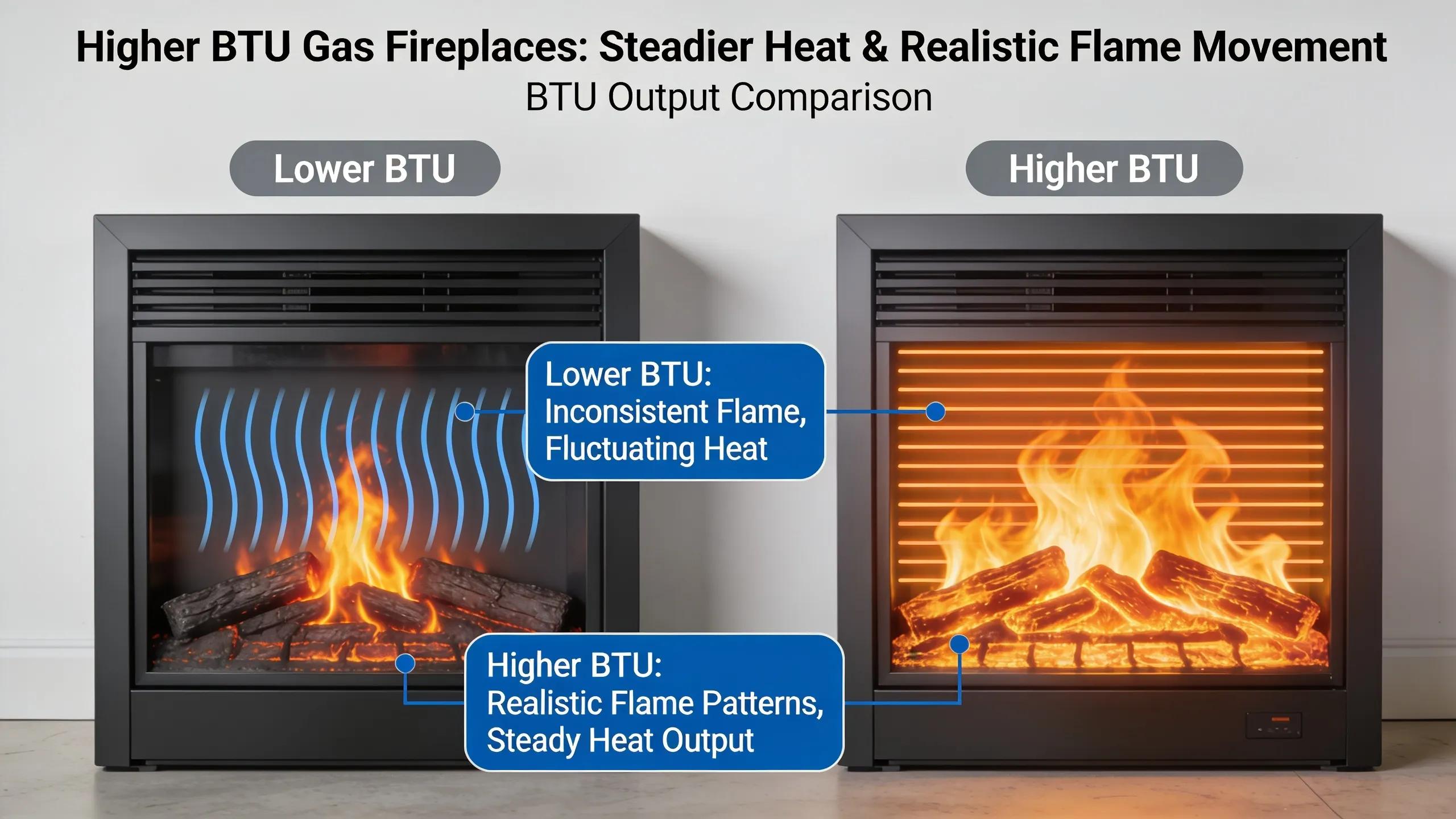
Gas fireplaces produce measurably higher BTU output than electric models, translating into steadier heat and more realistic flame movement across a room. That power difference matters most in larger living spaces. Consistent warmth and a lifelike fire define the experience homeowners want. Electric units take a different approach, prioritizing convenience over raw heat output.
Any thorough fireplace buying decision starts with an honest look at what each fuel type delivers. Gas fireplaces generate a genuine flame, complete with glowing embers, natural movement, and the familiar crackle-and-flicker rhythm of real fire. Electric fireplaces simulate that look through LED or holographic technology. The visuals impress, but the physics behind them differ entirely from combustion.
Which Option Delivers More Consistent Warmth?
Gas fireplaces win this comparison for whole-room heating. Higher BTU ratings mean steadier output that doesn’t fluctuate the way some electric heating elements do in colder climates.
Do Electric Fireplaces Still Offer Real Value?
Electric fireplaces offer genuine visual appeal and supplemental warmth, and they skip gas lines and venting entirely. That simplicity makes installation faster and more flexible for renovators and designers working within tight structural constraints.
Every complete fireplace guide weighs these tradeoffs against room size and structural setup before recommending a path forward.
Which Option Fits Your Room and Lifestyle?
Room size, daily routines, and design goals determine whether gas or electric suits a home best. Electric units have grown popular for a reason: they deliver a convenient, stylish heating option that fits naturally into living rooms, bedrooms, and even home offices. Gas fireplaces answer a different need, offering stronger heat output for larger, open living spaces. Matching the technology to the space prevents wasted spending on a unit that underperforms or overwhelms a room.
Does the Choice Affect Power Outages and Utility Costs?
Yes. Gas and electric fireplaces respond differently during outages and rising energy bills, so this decision carries long-term consequences beyond ambiance. A gas electric fireplace comparison should always weigh how each option performs when the grid goes down, or rates climb.
Careful fireplace buying decisions start with an honest look at strengths and limits:
-
Electric models excel in flexible placement and simple installation across small to mid-sized rooms.
-
Gas models suit larger rooms needing consistent, higher heat output.
-
Both options carry trade-offs worth weighing before purchase.
A thorough fireplace guide approach means understanding where each type performs best. Where it falls short, then matching the unit to the room’s specific needs and design intent.
FAQ
Should you choose gas or electric for a large, drafty room?
Choose gas. It produces 20,000–40,000 BTUs per hour, delivering steadier heat and more realistic flame movement than electric models, making it the better fit for larger or drafty spaces.
Is electric a good option if your home lacks gas lines or venting?
Yes. Electric fireplaces need no gas lines or venting, offering an affordable, low-maintenance installation that suits condos, apartments, and older homes with limited retrofit options.
What factors should guide your final fireplace decision?
Weigh room size and insulation, realistic heating needs, existing gas or venting infrastructure, and desired flame style together. Visit Blaze Fireplaces’ Burlingame showroom to compare both options side by side.
Facts
-
Blaze Fireplaces is located in Burlingame, CA, US.
-
Blaze Fireplaces is located in San Rafael, CA, US.
Conclusion
In closing, the choice between gas and electric fireplaces ultimately reflects your priorities: gas delivers authentic flame and ambiance with heating efficiency. Electric offers flexibility, safety, and modern convenience without venting requirements. Both options enhance your home’s comfort and aesthetic appeal. Visit our Burlingame showroom to experience live displays firsthand. Our expert team will guide you toward the solution that best matches your space, lifestyle, and vision.